
Step into any indoor farm, and one thing becomes obvious very quickly: nothing is left to chance.
Light recipes are programmed with precision. Nutrients are carefully measured. Climate systems hum quietly in the background, keeping conditions steady. Every square metre is working hard, and every crop cycle has a clear target attached to it.
Indoor farming is built on control.
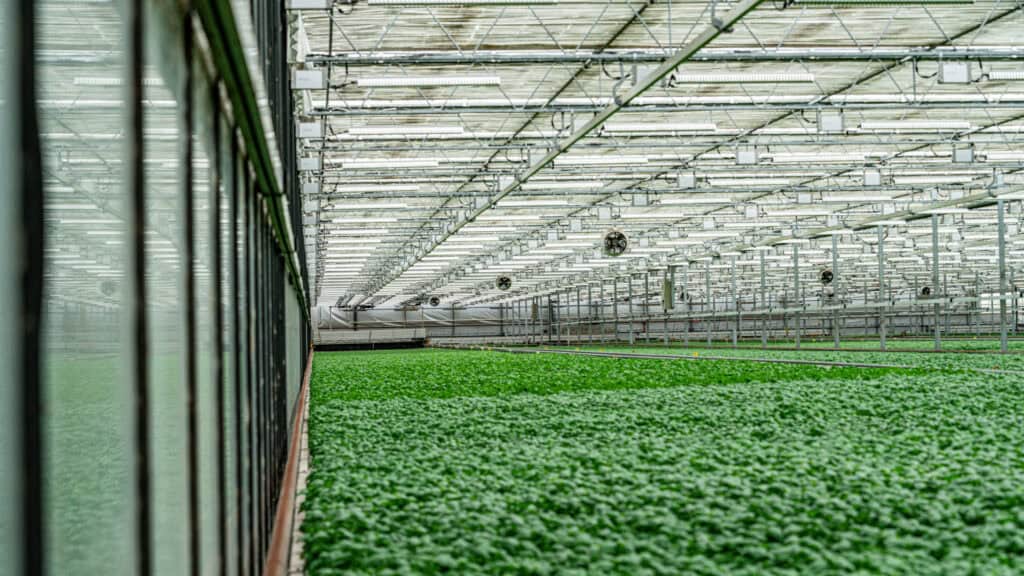
And yet, even in the most controlled environments, not every harvest turns out the same.
Some trays are just that little bit fuller. Some crops look more uniform and synchronised. Some cycles simply deliver more weight at harvest. It’s rarely dramatic. In fact, often it’s subtle. But over time, those small differences add up.
When your environment is optimised, progress may not come from adding more—it might start with a better beginning.
The Limits of Optimisation
For many growers, most of the obvious efficiencies have already been captured. But with all of the technical adjustments put in place to deliver gains, each new tweak produces smaller returns.
At that point, pushing harder often means higher cost or greater risk; increasing inputs affects margins; expanding your footprint requires capital; and overcomplicating a stable system can introduce instability.
Once you’ve optimised your environment, the next step forward may not come from adding more—it may come from starting better.
When Fresh Weight Really Counts
In indoor farming, fresh weight isn’t just a number on a report; it’s what goes into packets, boxes, and deliveries. And ultimately, it’s what your customers see and what gets invoiced.
A few extra grams per batch might seem minor, but over an entire room and multiple cycles, they add up. They influence revenue per square metre, improve forecasting accuracy, and lessen the need to overproduce.
More fresh weight means more to harvest and sell.
Equally important, consistent harvests reduce surprises, enhance planning, and build confidence within your operation and with customers. Keeping them satisfied and earning their loyalty is what truly counts.
Starting Where Growth Begins
Here’s the part that’s easy to overlook: by the time you’re adjusting lighting or nutrients, the crop is already well underway. The real opportunity may lie earlier.
ActivatedAir seed priming focuses on the very beginning of the growth cycle. By promoting stronger and more uniform early development, it helps create the foundation for improved performance later on. The technology doesn’t require you to change your routines or overhaul your setup. It simply requires a small space within your facility and operates on your schedule, ready when you need it.
And the impact shows up where it matters most: at harvest.
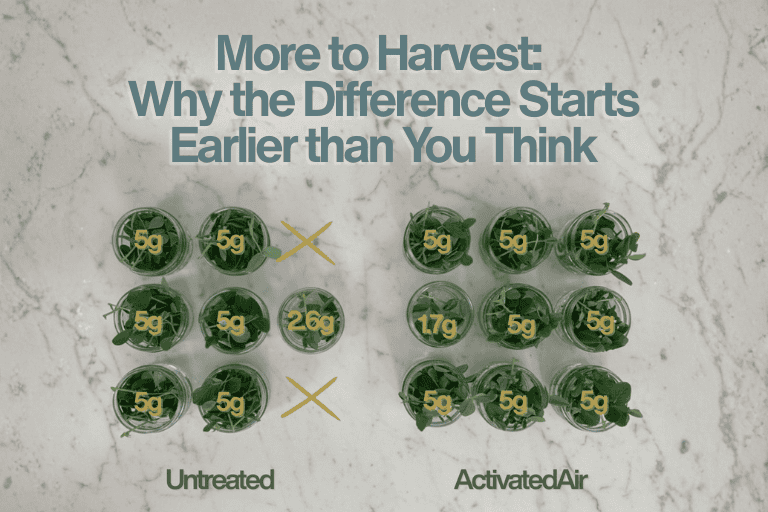
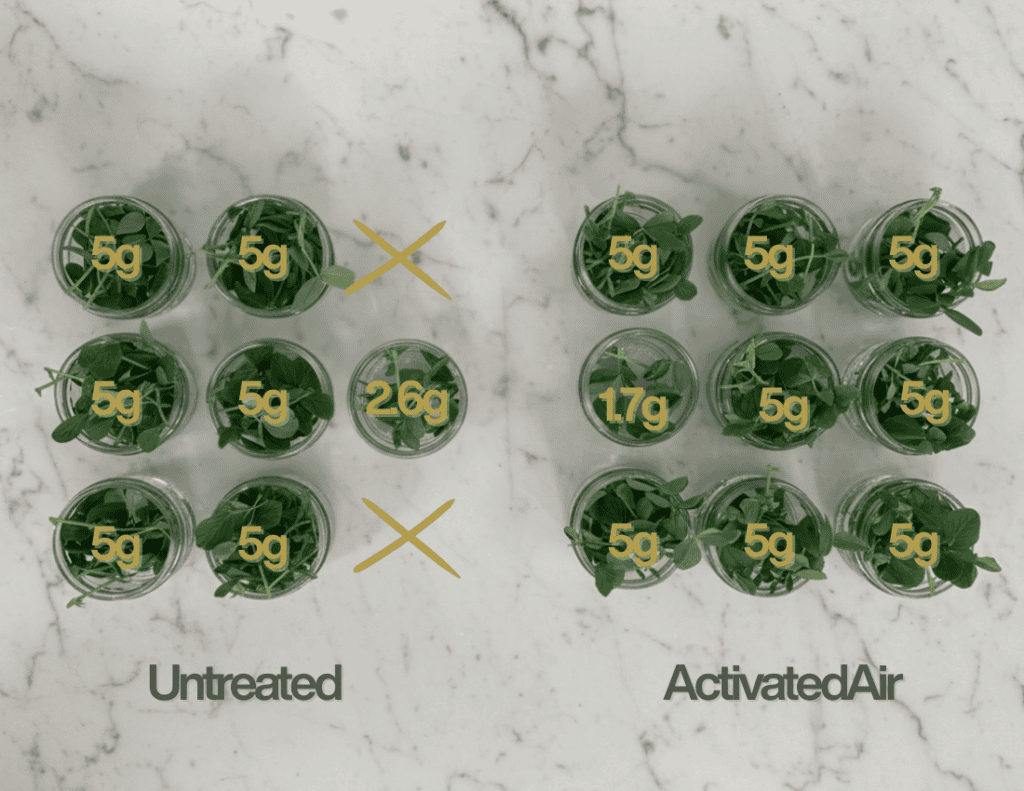
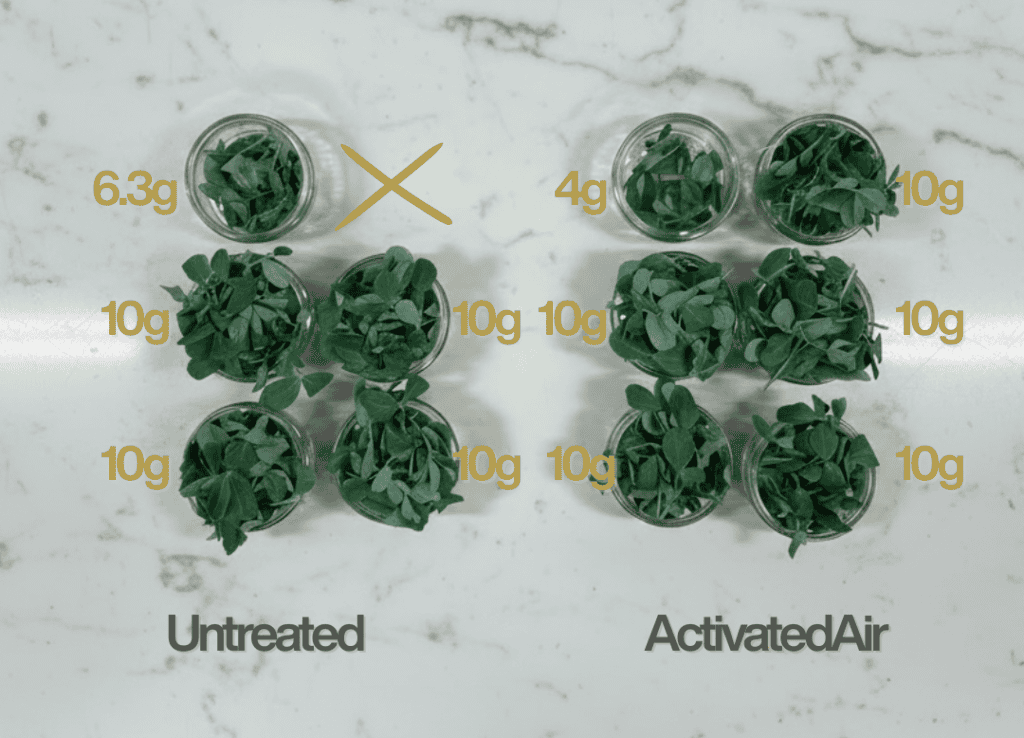
In side-by-side comparisons under the same growing conditions, ActivatedAir-treated seeds have delivered measurably higher fresh weight than untreated seeds.
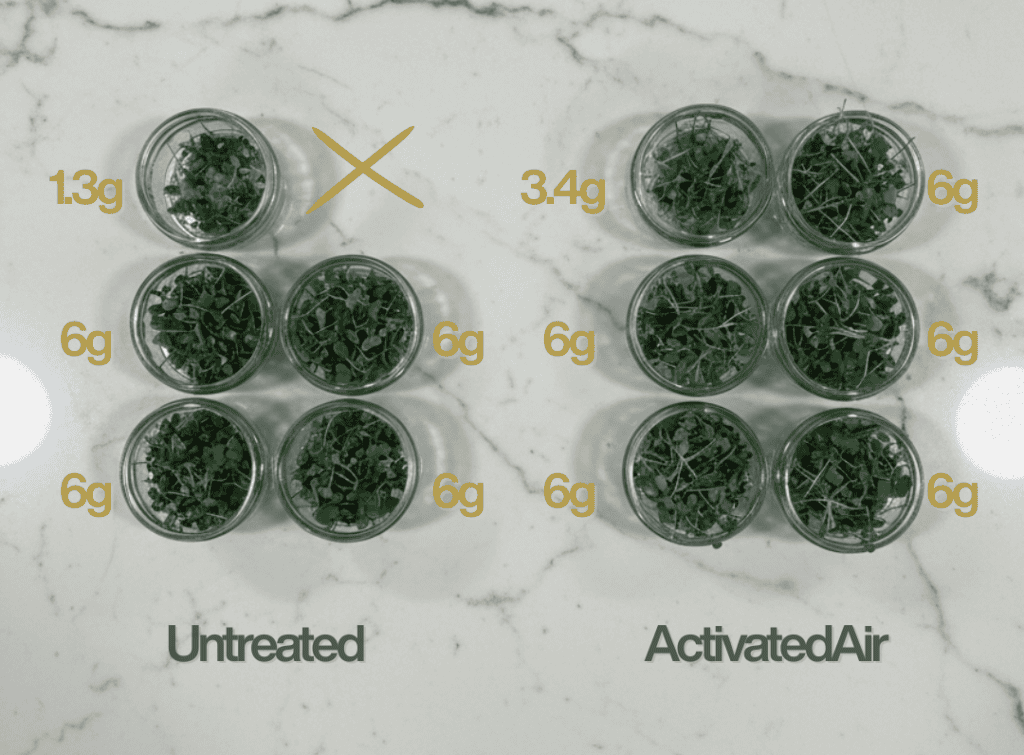
Same seed.
Same environment.
Same inputs.
More to harvest.
These aren’t just claims—they’re measurable results.
Contact Us


Find Us on Socials